Overview
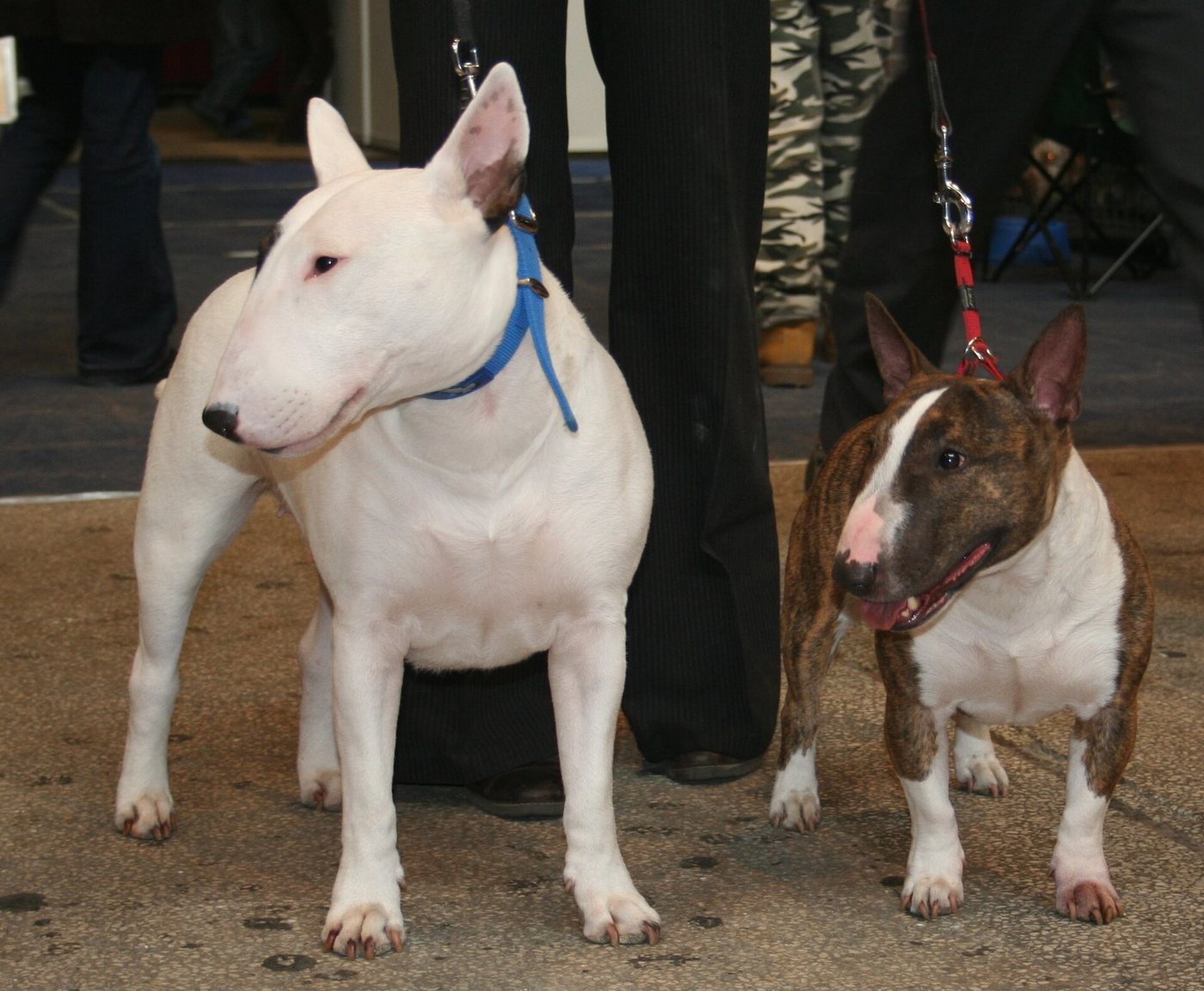
The Miniature Bull Terrier packs one of dogdom's biggest personalities into a dog you can pick up. Bred down from the standard Bull Terrier, it keeps the egg-shaped head, the wicked sense of humour, and the terrier determination, in an 18–28 pound body suited to smaller homes. It is a dog for people who laugh easily and train patiently.
Temperament & personality
Comical, affectionate, and gloriously stubborn. Mini Bulls are devoted shadows who want to be in the middle of everything, and they have a talent for turning any household rule into a negotiation. They are playful well into middle age and generally good-natured with people, though early socialization is important for easy relations with other dogs.
Appearance
All the Bull Terrier trademarks in a smaller frame: the unique egg-shaped head with its Roman-nosed profile, tiny triangular eyes, erect ears, and a short, glossy coat in white or coloured patterns including brindle and tricolour. Muscular and clown-faced, it looks like a dog designed by a cartoonist with excellent anatomical knowledge.
Care & daily life
About an hour a day of exercise and play, with training woven in — Mini Bulls are strong-willed and famously inventive about rules, so start early, keep sessions fun, and be consistent. The short coat needs only a weekly brush. White dogs need sun awareness, and all Mini Bulls need their chewing redirected to legal targets. Puppies from tested parents matter enormously in this breed (see health), so breeder selection is part of care.
Health & lifespan
The Miniature Bull Terrier is generally known for the following health watch-points:
- Primary lens luxation — a painful eye emergency, DNA-testable; carriers and at-risk dogs need monitoring
- Lethal acrodermatitis — a fatal inherited skin and immune disorder of puppies, now preventable by DNA testing breeding stock
- Hereditary kidney disease — urine protein screening is used in the breed
- Heart conditions such as mitral valve disease — ask for cardiac screening
- Deafness in all-white dogs and compulsive tail-chasing in some lines
Living with a Miniature Bull Terrier
Mini Bulls fit houses and larger apartments with owners who want an involved, entertaining dog. They are too boisterous and stubborn for owners who want an easy, biddable companion, and they need supervision with other dogs until their social skills are proven. Families with older children who enjoy the comedy usually thrive with them.
History
When the standard Bull Terrier — developed in 1860s Birmingham from bulldog and terrier crosses — proved too big for some tastes and some rat pits, breeders selected smaller specimens, at times crossing in toy breeds, to fix the Miniature. It shadowed its big sibling through the show world and was finally recognised by the AKC in 1991.