Overview
The Lhasa Apso is not a lapdog that happens to be old — it is a working watchdog that happens to be small. Developed over a millennium in the thin air of Tibet as the monastery sentinel, it is hardy, sharp-eared, deeply loyal to its own people, and entirely uninterested in impressing strangers. Owners who earn a Lhasa's respect get a charming, comical, devoted companion; owners expecting a Shih Tzu's instant friendliness get a lesson in the difference.
Temperament & personality
Confident, intelligent, and discriminating. A Lhasa decides who matters and commits completely to them, while treating the rest of the world with polite suspicion. They are trainable but independent-minded, with a dry sense of humour and a strong sense of their own dignity — harsh training backfires badly. Early socialization is essential to keep natural wariness from becoming snappiness.
Appearance
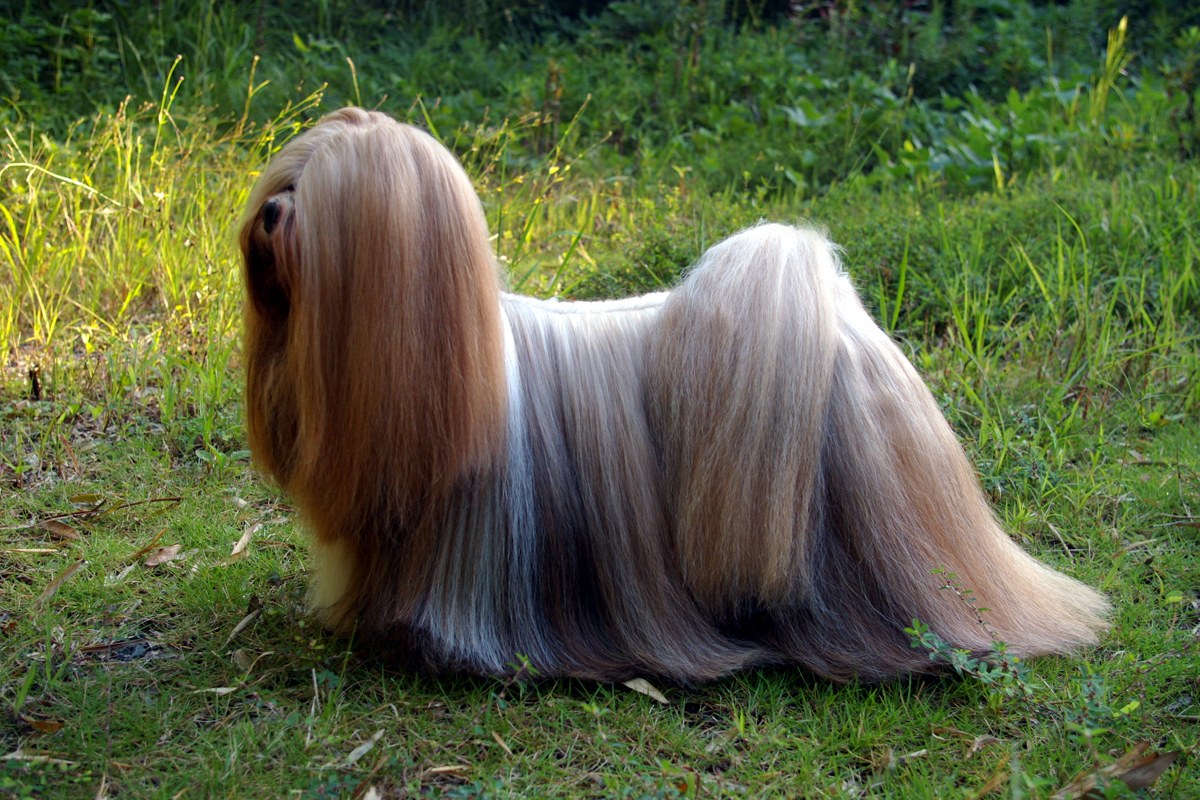
A small, hardy dog hidden under one of the most dramatic coats in dogdom: a long, straight, floor-length double coat, traditionally parted down the back, in gold, honey, cream, grey, or parti-colours. The head carries a fall of hair over the eyes — traditionally said to shade them from the glare of the Tibetan plateau — and the tail curves over the back in a plume. Beneath the hair is a surprisingly solid, muscular little dog.
Care & daily life
Moderate exercise — about an hour a day — suits a Lhasa; they enjoy walks and play but are not hyperactive. Coat care is the defining commitment: a full coat needs daily combing to the skin and can mat within days, so most pet owners choose a shorter clip, which still needs regular attention. Clean and check the eyes and ears under all that hair, and brush teeth regularly.
Health & lifespan
The Lhasa Apso is generally known for the following health watch-points:
- Kidney disease, including inherited renal dysplasia, is the breed's most serious concern
- Patellar luxation
- Eye problems including dry eye (keratoconjunctivitis sicca), progressive retinal atrophy, and cherry eye
- Intervertebral disc problems occur, as in many long-backed small breeds
- Sebaceous adenitis and other skin conditions in some lines
Living with a Lhasa Apso
Lhasas suit calm, adult-centred homes and apartments; they are hardy, dignified housemates who entertain themselves more than most small breeds and tolerate being alone better than clingier toys — within reason. They are a good match for owners who respect an independent dog rather than expecting constant adoration.
History
The Lhasa Apso is one of the world's oldest breeds, kept for at least a thousand years in the monasteries and homes of Tibet, where it served as an indoor sentinel — its sharp hearing and suspicious nature alerted the great Mastiffs guarding outside. The dogs were sacred gifts, never sold; the breed reached the West in the 1930s, partly through dogs given to naturalist C. Suydam Cutting by the 13th Dalai Lama. The AKC recognised the breed in 1935.