Overview
The Leghorn is what happens when you breed a chicken for one thing for 150 years: eggs, efficiently. Light-bodied, early-maturing, and converting feed to eggs better than almost any pure breed, it became the genetic backbone of the world's commercial white-egg industry. What it is not is cuddly. A Leghorn is a working bird — alert, flighty, self-reliant, and happiest ranging widely and roosting high.
Temperament & personality
Busy, sharp, and independent. Leghorns are the first to spot a hawk and the last to be caught. They are not aggressive; they are simply uninterested in people, and in a run they can be restless and squawky. Chicks raised with daily handling grow up calmer, but the breed's centre of gravity is the hedgerow, not the lap.
Appearance
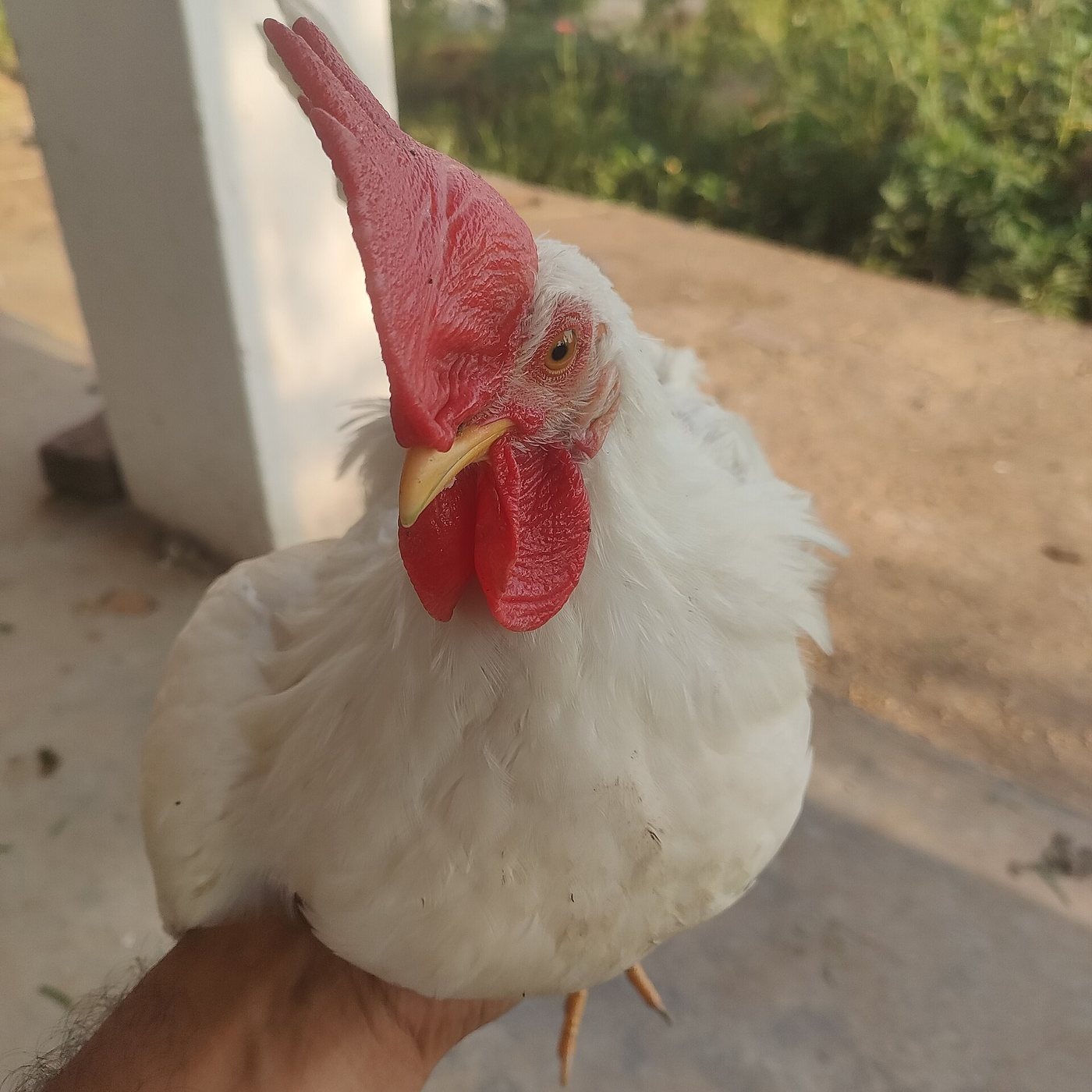
The archetypal white chicken of cartoons and egg adverts: a slim, athletic bird with pure white plumage, a large floppy single comb (the hen's often flops to one side), bright red wattles, white earlobes — the classic signal of a white-egg layer — and yellow legs. Other colour varieties exist (brown, black, buff), but white dominates because it is the commercial layer.
Care & daily life
Leghorns reward space and freedom: they are superb foragers that genuinely reduce their own feed bill on range, and confinement makes them restless and noisy. Provide flight-worthy fencing — they fly well and roost in trees if allowed. The big single comb is a frostbite risk in severe winters; a dry, draught-free but ventilated coop and a smear of petroleum jelly on comb tips in hard frosts help. Otherwise they are thrifty, low-maintenance birds.
Health & lifespan
The Leghorn is generally known for the following health watch-points:
- Frostbite on the large single comb in severe cold snaps
- Feather pecking and restlessness in confinement — a behaviour problem, not malice
- Marek's disease and the standard parasite load (red mite, lice, worms)
- Reproductive burnout and internal laying in very high-producing older hens
- Egg binding occasionally, as with any heavy layer
Living with a Leghorn
Leghorns suit free-range keepers, smallholders, and anyone whose priority is maximum eggs per kilogram of feed and who doesn't mind birds that keep their distance. They are a poor match for small urban runs, close neighbours, or children hoping to carry a hen around. Lifespan is the usual 5–10 years, with production front-loaded.
History
Leghorns began as hardy Italian farm chickens shipped from the Tuscan port of Livorno — 'Leghorn' being the English mangling of the name. Arriving in America in the mid-1800s, they were refined into the supreme laying fowl, and when the commercial egg industry industrialised, it built its white-egg lines on Leghorn genetics. Nearly every white egg in a supermarket traces back to this breed.