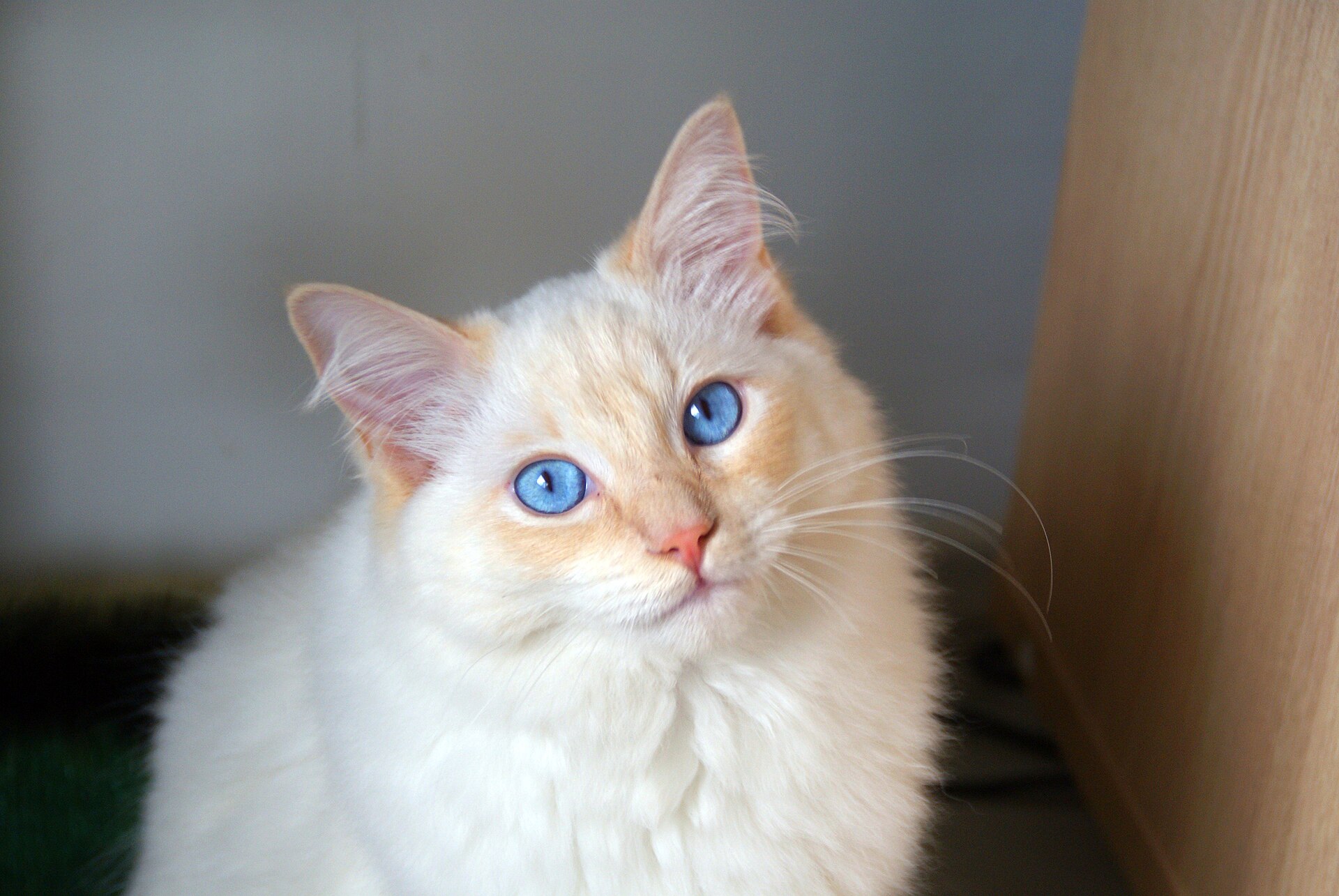
Overview
The Ragdoll is the cat world's gentle giant: a large, semi-longhaired breed selected above all for temperament. True to their name, relaxed Ragdolls famously melt in their owners' arms, and their calm, trusting nature makes them one of the most sought-after family cats in the world. Under the glamour is a sturdy, slow-maturing cat that stays kitten-soft in personality long after it reaches its considerable adult size.
Temperament & personality
Sweet, unflappable, and quietly devoted. Ragdolls are greeters rather than hiders, following their people with soft chirps, flopping at their feet, and joining whatever the household is doing at ground level. They are playful without being hyper and tolerant without being pushovers — a combination that makes them unusually good with children and other animals.
Appearance
The Ragdoll is a large, soft, colourpointed cat with a semi-long silky coat that feels like rabbit fur, striking blue eyes, and a sturdy, heavy-boned body. Patterns include colourpoint, mitted (white paws), and bicolour, in shades from seal and blue to chocolate, lilac, flame, and cream. Kittens are born white, develop their colour over the first weeks, and take three to four years to reach full size and coat.
Care & daily life
Despite its length, the silky coat resists matting and needs combing only twice a week to remove loose hair and prevent the seasonal shed from coating the house. Ragdolls are indoor cats — their trusting nature leaves them poorly defended outdoors. They are not athletic jumpers and prefer their fun at ground level: wand toys, tunnels, and lap time. Watch food portions, as the breed gains weight readily.
Health & lifespan
The Ragdoll is generally known for the following health watch-points:
- Hypertrophic cardiomyopathy (HCM) — a Ragdoll-specific mutation (MYBPC3) is DNA-testable; good breeders test and also screen hearts by ultrasound
- Polycystic kidney disease (PKD) — inherited kidney cysts; screening by DNA test or ultrasound is standard in responsible programs
- Bladder and kidney stones occur somewhat more often than average
- Gastrointestinal sensitivity and hairballs are common management issues
- Obesity — the breed's calm nature and hearty appetite make weight control a real concern
Living with a Ragdoll
Ragdolls are indoor cats for people who want a gentle shadow: families, multi-pet homes, and first-time owners all suit them well. They greet owners at the door, follow them around, and settle happily into apartment or house life. Busy households are fine as long as someone — human or animal — is usually around.
History
The Ragdoll was developed in Riverside, California, in the 1960s by breeder Ann Baker, starting with a white longhaired cat named Josephine and selected neighbourhood cats with exceptionally docile temperaments. Baker promoted the breed with flair — including some colourful claims about its origins that geneticists do not support — and founded her own registry, while other breeders took the cats into the mainstream associations. The CFA granted the Ragdoll championship status in 2000, and the breed has since become one of the most popular in the world.