Overview
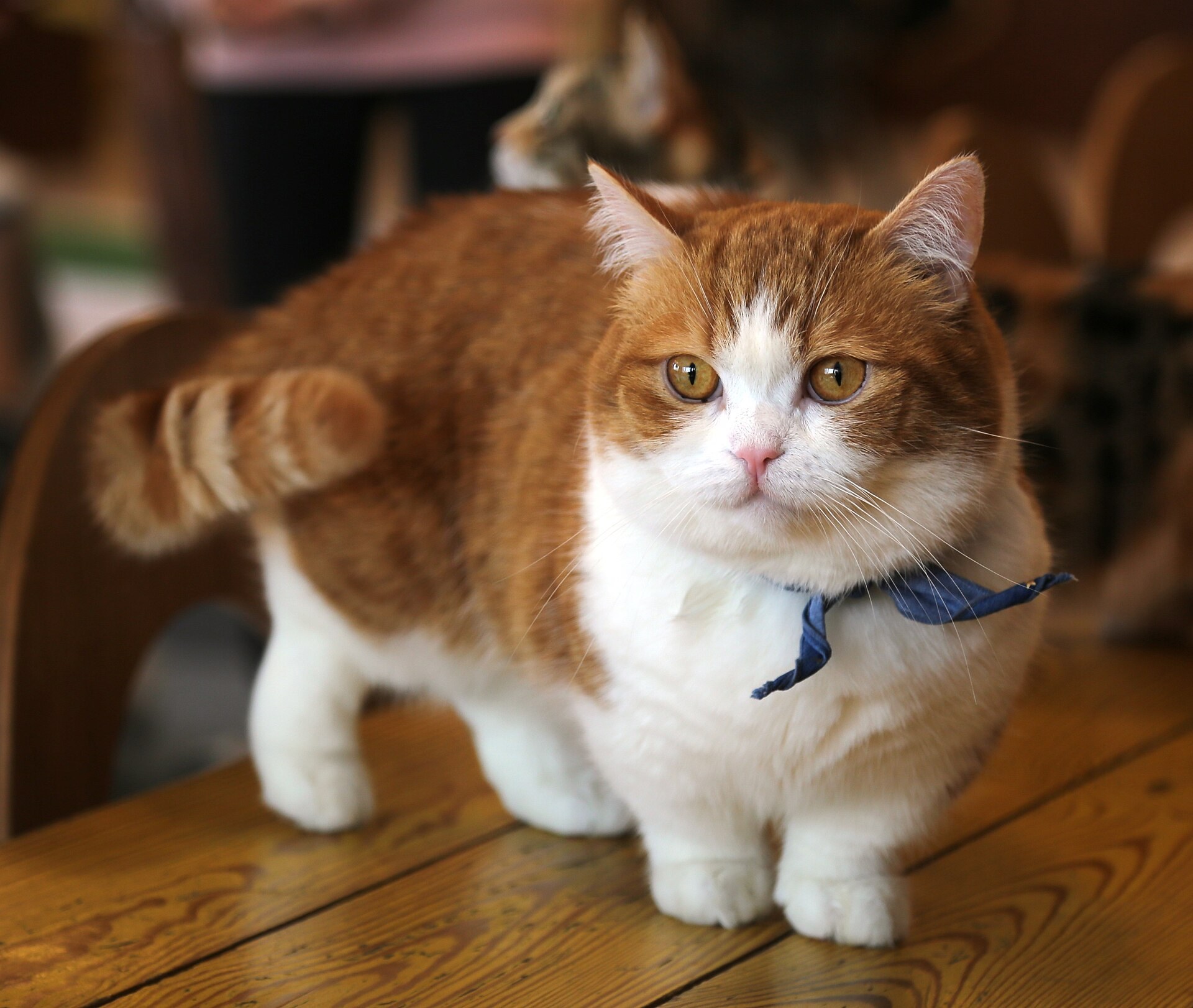
The Munchkin is the most debated breed on this page. Take the controversy away and you have a cheerful, confident, thoroughly cat-like animal: playful into adulthood, fond of hoarding shiny objects like a magpie, and completely unbothered by its own short legs. The controversy, though, cannot honestly be taken away: the breed exists because breeders selected for achondroplasia, a skeletal mutation, and several of the world's major registries refuse to recognise it for exactly that reason. This profile gives you both halves — the delightful pet, and the unresolved welfare question — so you can decide for yourself.
Temperament & personality
Outgoing, playful, and kittenish for life. Munchkins are confident little extroverts who greet visitors, join games, and follow children and other pets around the house. They are famous magpies, stashing shiny toys and small treasures in hidden hoards. Short legs do not slow the personality down at all: they race, wrestle, and supervise the household from their prairie-dog lookout pose, sitting up on their haunches whenever something interesting happens.
Appearance
The Munchkin is a normal-sized cat on short legs — the body, head, tail, and personality are standard feline issue, but the legs are roughly 2–3 inches shorter than a typical cat's, giving a low-slung, ferret-like profile. Both shorthaired and longhaired versions occur, in every colour and pattern. Munchkins often sit up on their hindquarters, prairie-dog style, to survey a room. Despite the short legs they move fast, corner like sports cars on their lower centre of gravity, and climb curtains and cat trees with enthusiasm, though they cannot jump as high as long-legged cats.
Care & daily life
Care is mostly ordinary: brush weekly (more for longhairs), feed carefully, and play daily. The single most important management point is weight — extra pounds load short legs and joints disproportionately, so keep a Munchkin lean. Provide steps or ramps to favourite high spots rather than expecting full-height leaps, and favour interactive ground-level play. Because the shape is controversial in the cat world, buy only from breeders who outcross to normal-legged cats (never Munchkin to Munchkin) and who screen joints and spines — and keep regular vet checks focused on mobility as the cat ages.
Health & lifespan
The Munchkin is generally known for the following health watch-points:
- The short legs are caused by achondroplasia (a dominant dwarfism gene); embryos inheriting the gene from both parents are not viable, so Munchkins must always be outcrossed to normal-legged cats
- Osteoarthritis and joint strain are the most consistent concerns — short limbs carry a full-sized body — and risk rises sharply with obesity
- Lordosis (excessive spinal curvature) and pectus excavatum (sunken chest) have been reported in some lines; breeders argue the link to the mutation itself is unproven — either way, screening and honest breeder history matter
- The ethics are unresolved: CFA, FIFe, and the UK GCCF decline to recognise the breed, holding that breeding for a deformity is unacceptable; TICA has recognised it since the 1990s
Living with a Munchkin
Munchkins suit most indoor households, including families and multi-pet homes, and adapt well to apartments — they are ground-level cats by build. They need people around, play built into the day, and furniture arranged so favourite spots are reachable by steps or short hops. Prospective owners should go in with eyes open about the welfare debate and buy only from breeders who outcross and health-screen — or consider that many lovely long-legged cats need homes too.
History
Short-legged cats are not new: a 1944 British veterinary report described them, and 'kangaroo cats' were reported in Stalingrad in the 1950s, but the lines vanished. The modern breed descends from a pregnant stray with short legs found under a truck in Rayville, Louisiana in 1983 by Sandra Hochenedel and named Blackberry; half her kittens were short-legged, and a son, Toulouse, founded the breed. Presented to TICA in 1991, the Munchkin was granted foundation status in 1994 — amid real controversy, including a judge's resignation — and championship status in 2003. Recognition remains split worldwide: TICA registers Munchkins, while CFA, FIFe, and GCCF do not, a divide that reflects a genuine and ongoing argument about breeding for the trait at all.