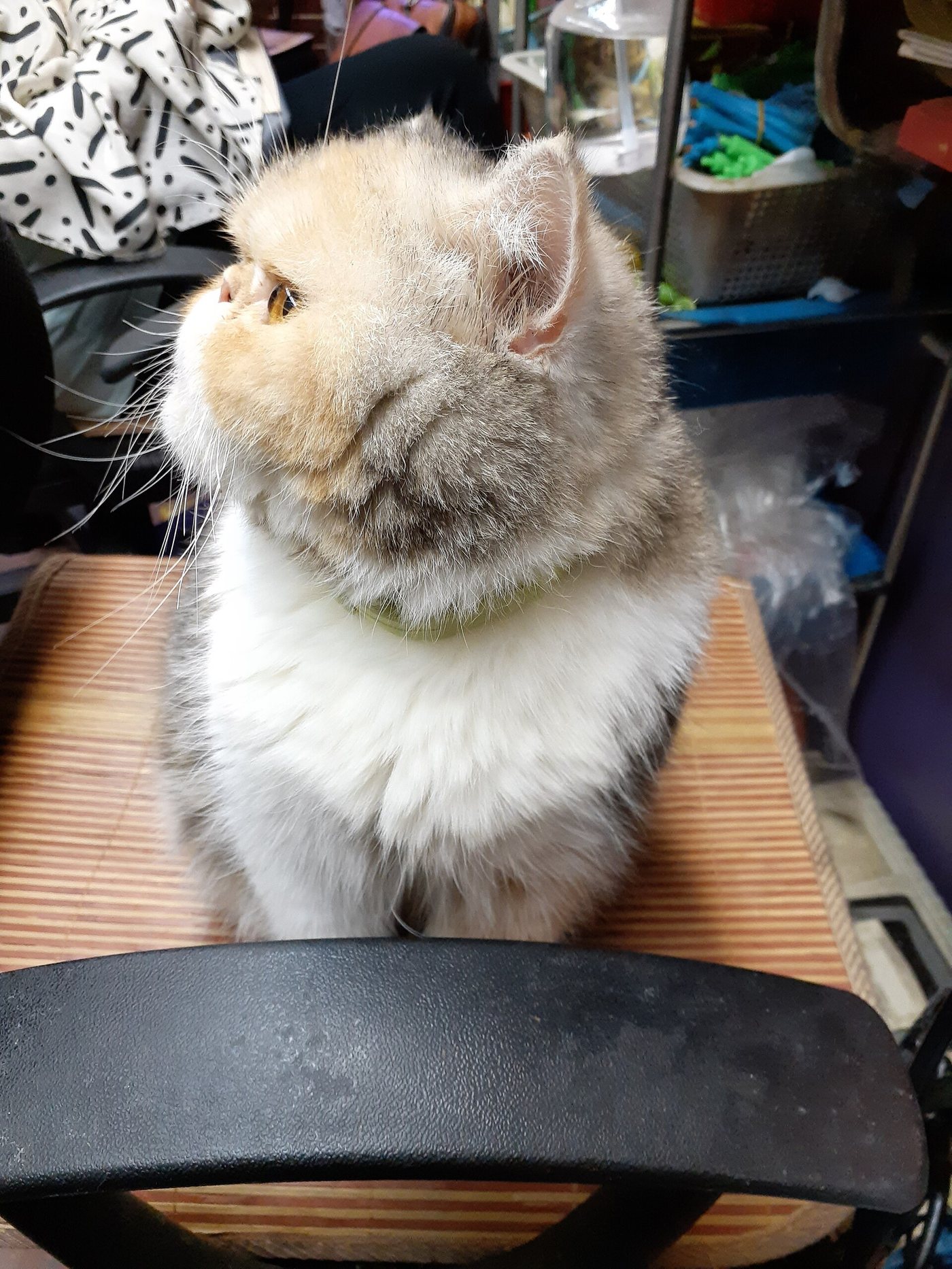
Overview
The Exotic Shorthair is the Persian in a plush, practical coat: same round head, huge eyes, and sweet, placid temperament, wrapped in dense teddy-bear fur that needs minutes of care rather than the Persian's daily regime. Bred in America in the 1960s, it has become one of the world's most popular breeds — a quiet, affectionate shadow cat for calm homes.
Temperament & personality
Sweet-natured, serene, and devoted. Exotics are more playful than Persians — they'll chase a feather wand with real enthusiasm — but in a gentle, unhurried way, and they are rarely demanding or noisy. They bond closely, follow their people from room to room, and are happiest as quiet companions in a settled household. Most are lap cats in waiting.
Appearance
The Exotic looks like a Persian dressed in a plush teddy-bear coat: round head, flat face with a short upturned nose, huge round eyes, small ears, and a short, cobby, low-slung body. The difference is the hair — a dense, soft, medium-length plush coat that stands out from the body rather than flowing. They come in the full Persian color range, from solid white and black to silver tabby and colorpoint.
Care & daily life
Easier than a Persian, but not no-maintenance: the thick plush coat with its heavy undercoat needs combing two to three times a week to prevent mats and cut shedding. Flat faces mean daily gentle wiping of eye tearing on light-colored cats, and the breed should live indoors — the foreshortened muzzle handles heat and exertion poorly. Keep meals measured; Exotics are placid and gain weight easily.
Health & lifespan
The Exotic Shorthair is generally known for the following health watch-points:
- Polycystic kidney disease (PKD) — inherited from Persian ancestors; a DNA test exists and responsible breeders have largely eliminated it from tested lines
- Brachycephalic traits: the flat face can cause breathing sensitivity, heat intolerance, and persistent tear overflow with staining
- Dental crowding and malocclusion are more common than in longer-muzzled breeds
- Calcium oxalate urinary stones occur at elevated rates in the Persian family
- Obesity, given the breed's placid nature — weight control is an everyday management issue
Living with a Exotic Shorthair
Exotics are indoor cats for calm, comfortable homes — apartments and quieter families suit them perfectly. They shadow their people gently, enjoy short play sessions, and then retire to a cushion to supervise. They are a good choice for someone who loves the Persian look and temperament but wants a fraction of the grooming — provided the household can offer air-conditioned summers and a relaxed pace.
History
American Shorthair breeders in the 1960s secretly crossed their cats with Persians to improve type, producing short-coated kittens with Persian faces. Rather than hide them, breeder Jane Martinke proposed a new breed — the 'Sterling' — which the CFA accepted in 1966–67 as the Exotic Shorthair. Outcrosses to Burmese and Russian Blue followed briefly, then the breed was closed to Persian and American Shorthair crosses; longhaired offspring are registered as Persians. The Exotic has since become one of the most popular breeds in the world — essentially, the Persian for people who cannot manage the coat.