Overview
If the budgie is the world's most popular pet bird, the cockatiel is its most beloved step up: a small crested parrot from Australia with a whistle for every mood, a crest that broadcasts its feelings, and a famously gentle nature. Cockatiels are the smallest cockatoos, and they keep the family charm — the head-bobbing, the dancing, the devotion — in a far more manageable, quieter, and longer-lived-than-you'd-expect package.
Temperament & personality
Cockatiels are sweet-natured, undemanding, and deeply companionable. A hand-raised cockatiel typically chooses its people and follows them room to room, whistling for attention and settling happily on a shoulder. Males tend to be the showier whistlers and heart-wing display artists; females are often quieter and steadier. They rarely bite hard, forgive handling mistakes, and are forgiving first parrots — which is why vets and bird clubs recommend them so consistently.
Appearance
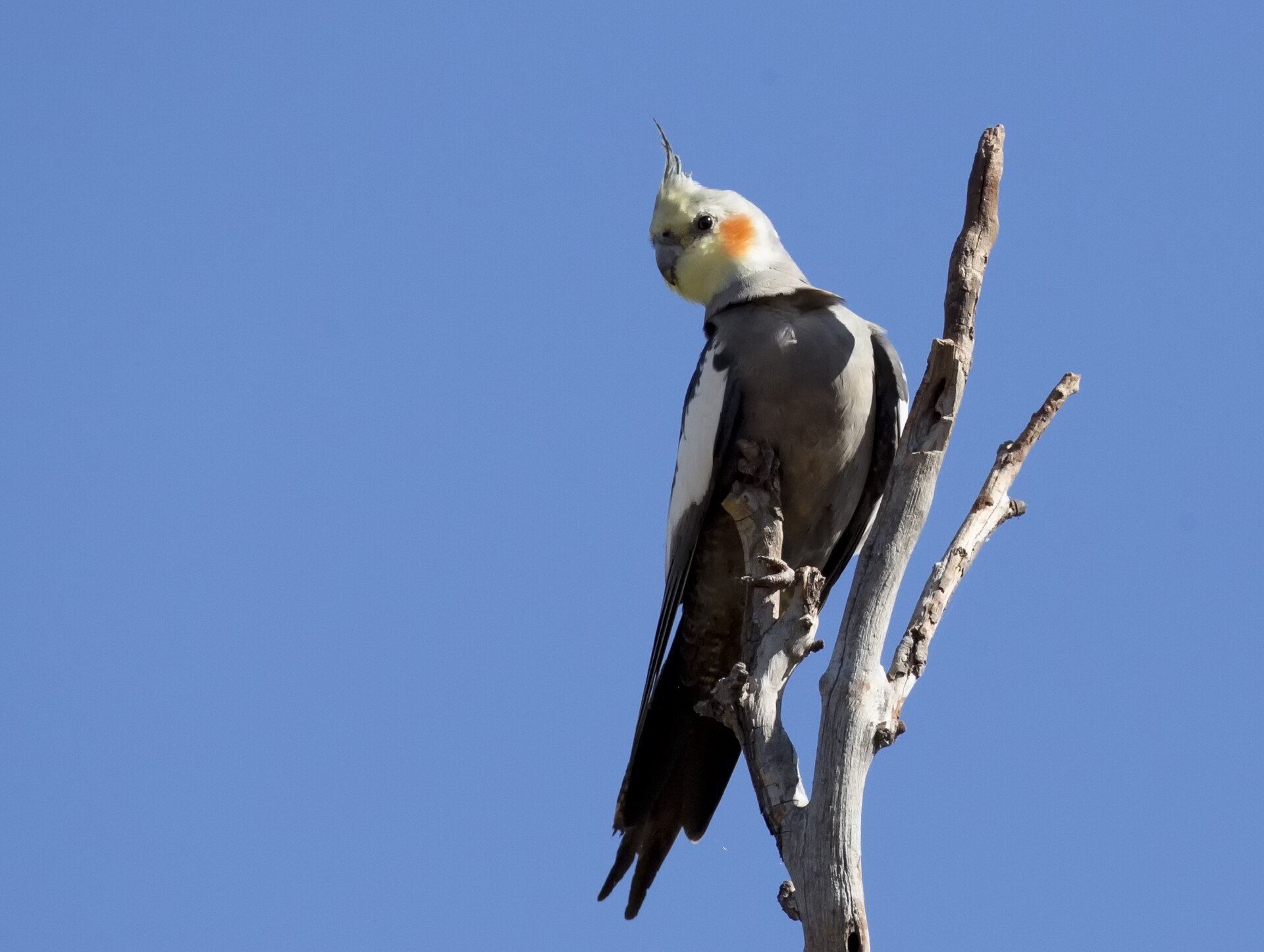
A slender small parrot with a long, elegant tail, most familiar in the grey-and-yellow 'normal' colouring with bright orange cheek patches. Lutinos are pale yellow-white with orange cheeks, and pearl, pied, and whiteface mutations are common. Males and females look similar in many mutations, though normal males have brighter yellow faces and orange cheeks.
Care & daily life
Cockatiels need a roomy cage (bar spacing ½–⅝ inch), daily time out to fly, and perches and toys they can shred — they love to chew. Feed pellets or a quality seed mix with daily vegetables and leafy greens; avoid avocado, chocolate, and caffeine, all toxic to birds. Cockatiel dust ('powder down') is heavy, so regular misting showers and an air purifier help — and people with asthma should think twice. Night frights are a real cockatiel trait: a dim night light can prevent panicked thrashing in the cage.
Health & lifespan
The Cockatiel is generally known for the following health watch-points:
- Fatty liver disease and obesity, especially on seed-heavy diets with little flight
- Psittacosis and other respiratory infections
- Egg binding in hens, a life-threatening emergency
- Night frights — panicked thrashing that can break feathers and injure wings
- Giardia and other parasites in some aviary-bred birds
- Heavy powder-down dust can aggravate human asthma in the home
Living with a Cockatiel
Cockatiels are arguably the best all-round family parrot: gentle enough for patient children, quiet enough for many apartments, and affectionate without the intensity of the big cockatoos. The commitment is 15–25 years of daily companionship, out-of-cage time, and tolerance of feather dust. People with significant asthma should spend time around cockatiels before committing.
History
Cockatiels are the smallest members of the cockatoo family, native to the wetlands, scrublands, and bushlands of mainland Australia, where they travel in pairs and small flocks. They were described scientifically in the late 1700s and reached European aviculture in the 1800s, but they only became a common pet after Australia banned bird exports in the 20th century and captive breeding took over. All the colour mutations in pet shops today — lutino, pearl, pied, whiteface — were developed in aviaries from the 1950s onward.